Technology designed to outsmart feral cats
With partners, we’re developing AI-powered technology to help the fight against feral cats.
Aboriginal and Torres Strait Islander people should be aware that this site may contain images, voices and names of people who have passed away.
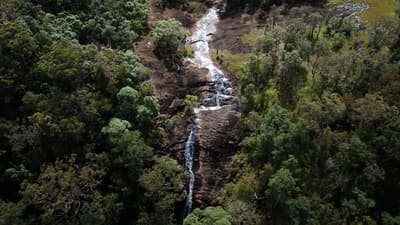
Wooroora Station is a 20,333-hectare property in Northern Queensland that is home to wet sclerophyll forest, rainforest, savannah woodland and waterways bound for the Great Barrier Reef. The majority of the landscape’s biodiverse environment remains intact, yet could easily disappear to threats such as logging or mining.
Wooroora could become Bush Heritage's next conservation reserve.
In northern Queensland, an opportunity awaits our supporters to protect 20,333 hectares of rainforest and sun-drenched savannah woodland.
Early-morning mist clings to rhyolite outcrops carved by the deep blue river below. The water quickly flows downstream towards the Great Barrier Reef, while the twittering of White-throated Needletails (Hirundapus caudacutus) fills the air.
As the mist dissipates, it reveals a rich, biodiverse landscape. A heart-shaped patch of dense rainforest stands out among sun-drenched savannah woodlands, bridging a gap between two natural worlds.
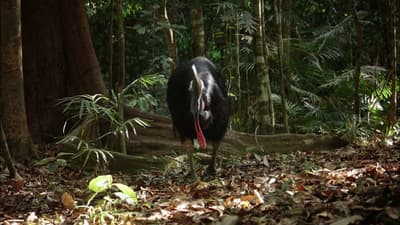
This is Wooroora. A meeting place for nature. And potentially, Bush Heritage’s next conservation reserve. It’s one of the few places on Earth where cassowary and koala country meet.
“Wooroora is an incredibly important area for biodiversity,” says Head of Region for the North, Dr Jo Axford. Spanning 20,333 hectares, the cattle station lies on the land of the Jirrbal people and falls within both the Einasleigh Uplands and Wet Tropics bioregions, 100 km south-west of Cairns in Queensland.
“Within an instant, you can walk from beautiful, open woodlands into a dense rainforest with a thick canopy where it’s moist and cool,” Jo explains.
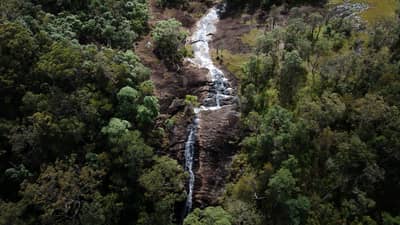
Sitting in the Herbert River catchment, water in Wooroora’s creeks and rivers eventually flows downstream to the Great Barrier Reef. Rainforests and wetlands help filter and clean the streams bound for the World Heritage-listed coral reef.
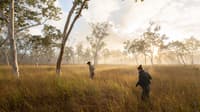
But this unique part of Queensland is at risk. The majority of the landscape’s biodiverse environment remains intact, yet could easily disappear.
“At the moment, it could potentially be logged, mined or developed,” Jo says. One of the biggest threats to biodiversity is deforestation. Australia has one of the highest rates of deforestation among developed nations and Queensland remains a hotspot for this activity. Logging exacerbates erosion, pollution and sedimentation along our waterways.

– Dr Jo Axford, Head of Region for the North“What we do for Wooroora is vital to protecting the extraordinary corals and marine life on the world-famous Great Barrier Reef.”
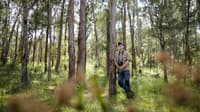
Jo has worked in conservation for 30 years and witnessed the health of the bush decline. “The climate change crisis is increasing, and the opportunity to save intact, beautiful bushland such as Wooroora is very rare,” Jo says.
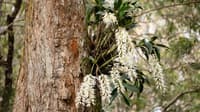
Wooroora’s environment is almost 98% intact. Old wet sclerophyll forests filled with towering eucalyptus create important habitat for threatened species, including the Yellow-bellied Glider (Petaurus australis) and Koala (Phascolarctos cinereus), while the rainforest remnants supports Lumholtz’s Tree-kangaroo (Dendrolagus lumholtzi). The forest’s moist understorey is a sanctuary for ferns, shrubs, fungi and rainforest plants.
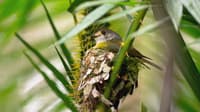
Taking down the fenceline between our neighbouring Yourka Reserve and Wooroora, while reconnecting Jirrbal Traditional Custodians with Country, will extend the protection of many invaluable species in this region. “This will be really important for connectivity and the protection of species, but also improving our active land management at Yourka,” says Jo.
Acquiring Wooroora is one of the most ambitious tasks in Bush Heritage’s 35-year history. We want to bring our trusted land management, long-held knowledge of the area and right-way work alongside the Jirrbal people, to secure the future of its unique ecosystems. In doing so, we can connect and contribute to the protection of a continuous 429,000 hectares, from Koombooloomba and Tully Falls national parks to Yourka Reserve, forever. •